In our previous Legal guide on ‘Investment Opportunities in Vietnam,’ we explored the possible reasons behind Vietnam’s position as the third-largest economy in ASEAN. Today, our Legal guide shifts its focus to the forms of foreign investment in Vietnam and outlines the general steps necessary to develop an investment project in Vietnam.
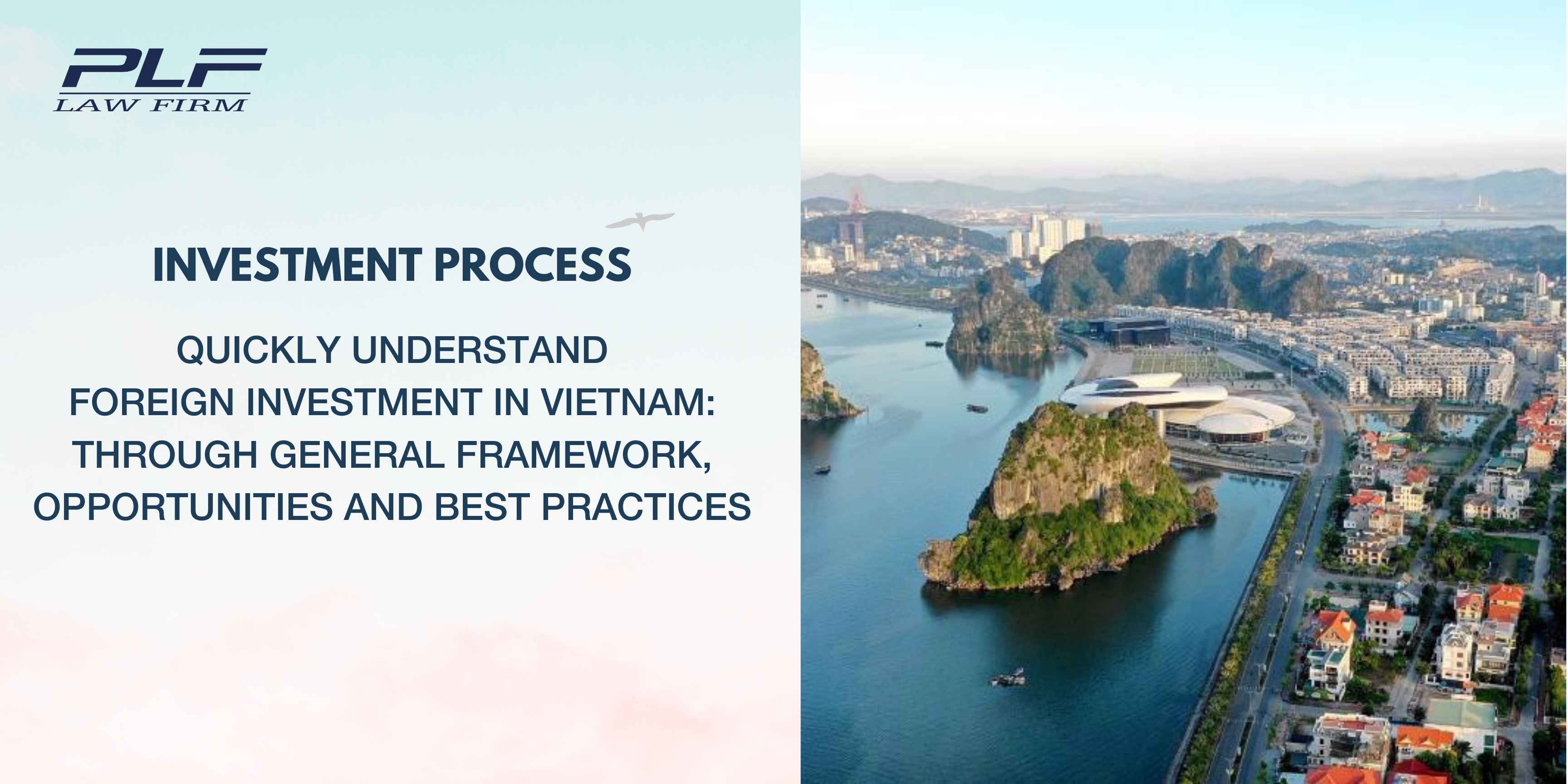
Quickly understand foreign investment in Vietnam: Through the general framework, opportunities, and best practices
Over the last decade, Vietnam has acquired a special status among emerging economies, establishing itself as an extremely dynamic marketplace. As one of the leading booming economies, Vietnam naturally attracts a great deal of foreign investment, but it can no longer confine itself to its status as a promised land for foreign capital: Vietnam is becoming a real partner on the international stage, and a rule-maker in legal terms.
1. Overview of Foreign investment in Vietnam
It is important to take the measure of global growth and market trends to calibrate a viable investment. A quick look at existing opportunities and the growth context in Vietnam
1.1 Economic trend: Bird’s eye view of business opportunities
In economic terms, the challenges of relocating industrial activities of international investing for export to the rest of the world seem to be giving way to new strategies for conquering the Asian market, which may lead to new objectives:
- Access the Vietnam and diversify their presence in Asia;
- Create an alternative to Chinese operations (“China plus one” strategy”); and
- Leverage highly attractive new free trade agreements.
In Southeast Asia, we are gradually witnessing the blooming of a middle class with major consumption needs. This economic transformation is also occurring in Vietnam, where almost the middle class is driving a surge in the technology, household appliances, retail, and services markets. Vietnam is one of the countries with a remarkable GDP growth rate with a strong economic recovery in the post-pandemic.
At the same time, Vietnam stresses the political will to adopt a selective approach to attracting foreign investment, with priority given to high-tech projects, innovation, research and development, in addition to facilitating the participation of Vietnamese companies in the value chain and promoting the digital economy.
These two above-mentioned movements also converge to make Vietnam a viable alternative to Chinese delocalization operations (China plus one strategy). China being more than ever mired in a commercial war with the United States, which is hampering its export of products involving semiconductors and, as a result, the entire new technology sector in this area.
The very recent Vietnam-US summit, bringing together representatives of the major tech and strategic US firms such as Google, Intel, Boeing, or Amkor, dedicated to the creation of preferential agreements on the production of market goods incorporating semiconductors and the high-tech sector, confirmed America’s will to see Vietnam as a viable alternative to the Chinese market, and allowed Vietnam to assert itself as a capable economy for a production remote.
It is therefore possible to believe in the success of investment operations of any kind in Vietnam, but for this to happen, foreign investors need to be enlightened about good practice and the legal imperatives that make an anticipated operation a strategic success.
1.2 International Commitments: Agreements boosting economic potential for foreign investors
Vietnam has integrated into a series of regional and global economic alliances that make the Pacific zone a real rule-maker in the conduct of free trade agreements.
This trend has intensified in recent years with the strengthening of economic cooperation:
- Within the ASEAN zone with the RCEP (Regional Comprehensive Economic Partnership Agreement)

- The wider Indo-pacific zone with the IPEF (Indo-Pacific Economic Framework Agreement),
- The opening up of this enhanced cooperation to an enlarged trade zone comprising several of the world’s leading economies with CPTPP (Comprehensive Partnership for Trans-Pacific Partnership Agreement); and
- Free trade agreements signed with the European Union which demonstrate Vietnam’s ability to offer the standards of protection required for full integration into world trade with EVFTA (EU-Vietnam Free Trade Agreement) and IPA (Investment Protection Agreement).
On the sidelines, trade between Vietnam and the African continent is also booming, and the recent signing of the ZLECAF agreement by several African Union countries (designed to promote intra-continental trade) opens new perspectives for the Indo-Pacific alliance’s economy.
1.3 Vietnam Market key points: Understanding the genetics of the Vietnamese economy
The Vietnamese economy is highly diversified, having fully entered the status of a market economy, recognized as such internationally.
Once an agriculture-based economy, Vietnam has since diversified enormously into all sectors of industry, fisheries, and finally the finer sectors such as high tech and all the technological functions needed to support a booming digital economy.
Vietnam is as much a target for the relocation of international export activities as it is for operations aimed directly at the Southeast Asian market. Its openness to the sea, the Pacific balcony, makes it a dense trading zone by sea.
It comprises 4 major industrial sectors, with a high density of economic activity:
- Garment and textile industry
- Automotive industry
- Electronic industry
- Food, beverage, and feed processing industry
Among dozens of extremely dynamic market sectors, including:
- Air Freight
- Automotive
- Automotive: EV Batteries
- Blue Economy
- Cold Storage
- Cosmetics
- Digital Economy
- Education
- Food and Beverage
2. Forms of Foreign Investment in Vietnam
Translated into legal terms, foreign investment in Vietnam can take various forms.
The investor must therefore choose the legal structure for his investment, considering the rules relating to foreign investments and the requirements specific to certain regulated activities.
2.1 Some common investment forms
Several criteria can already be used to draw the potential nature of the investment and relate directly to the investment project:
- The nature and volume of the project investment given the particular conditions of the sector of activity, the granting of regulated licenses;
- The tax regime applicable to such activities;
- The involvement of a local partner;
- The rules apply to foreigners in specific sectors.
Commonly, investment in the establishment of a business organization (direct investment) and investment in the form of capital contribution or purchase of shares or stakes (indirect investment) are forms that foreign investors prefer to choose.
2.2 Establishing a new structure
Regarding the form of direct investment in establishing an economic organization, depending on the characteristics of each type of economic organization and the actual needs of the investor, the investor will choose the appropriate type for themselves.
Consequently, this direct investment process will therefore necessarily involve the creation of a legal entity in Vietnam. Furthermore, the choice of structure will depend first and foremost on the size of the investment project and its potential openness to new shareholders.
As a result, of the two structures most suited to the creation of a foreign-owned entity:
- LLC (Limited Liability Company) will be more likely to cater to small and medium-sized enterprises;
- JSC (Joint Stock Company), which is more complex, will be better suited to opening up to new investors for larger-scaled projects.
|
Limited Liability Company |
Joint Stock Company |
|
The LLC is a structure that has the advantage of being simple and of being able to play the role of a corporation while at the same time bringing together several investors. The LLC can be set up by a single person. |
The JSC is a more complex structure that can accommodate an infinite number of investors holding shares in the company’s capital. The charter capital is divided into equal pieces known as shares. |
|
The LLC does not issue shares: Partners must increase the charter capital to increase the company’s capital. |
Shares may be issued by the JSC to enable it to expand its capital base and allow new shareholders to join. |
|
Each member’s liability in an LLC is capped at the amount of their initial investment. |
Shareholders are only responsible for debts and other property obligations of the company to the extent of the capital invested in it. |
|
This type of structure is best suited to small and medium-sized businesses. |
This type of structure is more advantageous for medium-sized and large companies, whose expansion plans are likely to evolve concerning the initial capital. |
2.3 Extending an existing legal structure
To establish a foreign investment in Vietnam, a foreign investor may also use legal formalities to extend its existing foreign entities. Depending on the purpose, the foreign entity may be extended in the form of:
- RO (Representative Office), outlining the advantages of an advanced position for a future establishment in Vietnam
- BO (Branch Office), which serves as an extension of a parent company.
| Representative Office | Branch Office |
|
|
|
This structure is therefore likely to be used for:
|
This structure is therefore likely to be used for:
|
2.4 Merger and Acquisition
Foreign investors are also likely to consider bringing their foreign structure closer to a local enterprise. This investment structure is commonly used by international groups expanding into new markets. This often involves mergers, takeovers, or equity investments in established Vietnamese companies.
- Foreign Direct Investment (FDI): Foreign direct investment is a category of cross-border investment in which an investor resident in one economy establishes a lasting interest in and a significant degree of influence over an enterprise resident in another economy.
- Merger: In corporate law, a merger is the absorption of one corporation into another. The surviving corporation acquires all the assets and liabilities of the corporation getting absorbed.
- Acquisition: In corporate law, an acquisition is a transaction wherein one company purchases most or all of another company’s shares or assets to gain control of that company.
-
Notes:
- Despite significant fluctuations from year to year, Vietnam remains a dynamic venue for M&A deals, especially in fintech and industrial sectors.
- However, acquiring a stake in or acquiring the capital of a local company involves certain requirements for foreign investors.
- At least one Vietnamese partner with one share of capital must participate in the most sensitive sectors.
2.4.1 Foreign ownership control
Foreign ownership control:
When it involves a foreign investor, M&A approval is required in two cases:
- if the foreign investor is acquiring ownership in a target company engaged in a specified industry;
- if the acquisition results in foreign investors or foreign-invested economic organizations owning more than 50% of the charter capital of the target company.
2.4.2 Economic concentration control
Transactions involving structural changes sometimes result in a concentration of market share in favor of a single company. Therefore, the VCCA (Vietnam Competition and Consumer Authority) carries out merger control in a number of cases that can be linked to:
- The intrinsic value of a structure created by the merger of two companies;
- The monetary value of the operation;
- The volume of combined market share resulting from the operation.
Please note that these operations (merger, acquisition, joint venture, etc.) should not cause or potentially cause substantial anti-competitive effects on the Vietnamese market.
2.5 Partnership and Cooperation
There are investment forms that do not require creating or extending existing structures. Furthermore, these forms resemble partnerships with public and private sectors. These indirect investment channels include:
- PPP (Public-Private Partnership) allows a foreign company to acquire an equity stake in a public sector project;
- BBC (Business Cooperation Contract) are investment partnerships with locally established companies.
2.5.1 Public-Private Partnership (‘PPP’)
A public-private partnership is a financing method. It involves a public authority collaborating with private service providers to finance, build, and operate public facilities. In return, the private partner receives payment from the public partner or from the users of the service it manages. Formerly known as the BOT (Build Operate Transfer) system, the PPP has recently undergone a complete overhaul to encourage the creation of partnerships with foreign construction giants, limiting this type of agreement to the following sectors: construction, renovation, upgrading, expansion, management, and operation of infrastructure facilities and provision of public services.
The PPP offers a significant advantage by simplifying partnership arrangements. Moreover, it consolidates all previously scattered sector-specific provisions into a single law. Consequently, this law establishes the main guarantees and operating procedures for PPPs, which are clearer than their predecessor.
Nevertheless, the novel PPP system has encountered lukewarm reception from foreign investors. Despite its nascent stage, the reform has yet to generate anticipated interest among potential foreign partners. Importantly, the system’s lack of precision and inadequate safeguards for foreign investors’ rights caused this outcome.
2.5.2 Business Cooperation Contract (‘BCC’)
A Business Cooperation Contract (BCC) is a type of contract signed between investors to divide profits or products of an operation without establishing an economic entity. In practical terms, a BCC is a way for a foreigner to invest in an economic operation carried out by a locally established company (Vietnamese or foreign) and to recuperate part of the profits. Moreover, this cooperation is highly regarded for its efficiency and speed. In addition, it is also extremely cost-effective for investors who prefer not to establish their own structure.
This type of contract generally has a term (since it relates to one or more transactions) and must comply with certain conditions. Additionally, when involving a foreign investor, it must adhere to specific conditions, including obtaining an investment certificate.
2.6 Foreign Investment conditions
Foreign investments are subject to a stricter authorization regime than domestic investors. Vietnam controls foreign investment to safeguard key sectors impacting its security and political integrity. Additionally, this control aims to provide foreign investors with essential guarantees for specific economic activities (professional and financial guarantees).
These specific rules are are outlined in:
2.6.1 Issuing of the IRC (Investment Registration Certificate)
Different authorities, such as the Industrial Zone Authority or the Department of Planning and Investment, issue the certificate based on the project’s location and business line. Subsequently, this certificate grants preliminary authorization for a foreign investor’s submitted investment project. Specifically, authorities issue the IRC after thoroughly examining the investment project, including the investor’s identity, project goals, duration, and estimated initial capital. Obtaining it is a precondition for setting up a 100% foreign-owned company in Vietnam. Furthermore, for most small- and medium-scale projects that do not involve key sectors for the Vietnamese state, examination by the authority will suffice. The National Assembly, the Prime Minister, or the Provincial People’s Committee must also approve certain projects. Noticeably, these projects typically affect sensitive sectors like real estate or have significant environmental impacts, such as nuclear activities.
2.6.2 Some prohibitions and restrictions to the access of foreign investment
Some of key sectors have foreign ownership limits including:
- Banks: 20% for any foreign organization and related parties, 15% for any foreign organization, 5% for any foreign individual. Please note that the total foreign ownership in a Vietnamese joint-stock bank is 30%.
- Nonbank credit institutions like finance organizations: total foreign ownership of shares in a Vietnamese joint-stock non-bank credit institution is 50%.
- Aviation: 34% of all foreign investors investing in airlines or companies providing aviation services.
- Land transportation: 49% for transportation of people, and 51% for transportation of goods.
- Sea transportation: 49%.
- Logistics: 50% for container handling, no cap on customs clearance and brokerage but must be in the form of a joint venture with Vietnamese investor.
Certain business lines necessitate foreign investors to establish a Joint-Venture (JSC) company. Besides, these business lines typically require a partnership with at least one Vietnamese partner:
- Tourism
- Advertising activities
- Passenger Transportation
- Freight transportation
- Container handling services
Therefore, effective business operations in Vietnam necessitate careful adherence to the legal frameworks for foreign investors. Consequently, this helps to limit risks in investment activities and optimize the advantages that investment incentives bring.
3. Quick steps on Foreign Investment process
To help you find your way around investing in Vietnam, we have selected the main stages. PLF Law Firm provides legal counsel throughout the investment process. Moreover, we ensure comprehensive support tailored to your specific needs, from initial consultation to regulatory compliance.

3.1 Understanding the market
Possible creation of an Representation Office to observe and obtain an advanced position to draw up an investment project.
3.2 Defining your action
Investor should set up an investment strategy. In doing so, investors must determine the investment form, the capital investment amount, and understand the necessary formalities.
3.3 Opting for a method
- Setting up a new company:
Creating a local legal structure (mostly LLC or JSC) owned by foreign investors
- Extending a foreign structure:
Legally extending a foreign structure by creating a Representative Office or Branch Office
- Entering into M&A Agreement:
M&A deals enable a presence through the legal and commercial merger of several companies
- Creating a Partnership or Collaboration:
These types of contracts allow you to invest in a collective commercial relationship without setting up a legal structure
3.4 Financing the project
Companies and investment projects can access local financing solutions. Moreover, they can achieve this by controlling foreign banking flows. In particular their ability to borrow from local credit institutions.
| Interested in investing in Vietnam? | |
| Start by contacting Our Legal Team for expert guidance and support. | |
| Address | 16th Floor, Doji Tower 81-85 Ham Nghi, District 1, Ho Chi Minh City, Vietnam |
| Phone number | +84 283 821 2161 |
| inquiry@plf.vn | |
Ebook - Quickly understand foreign investment in Vietnam: Through general framework, opportunities and best practices
Get instant access to our downloadable resource packed with expert insights.