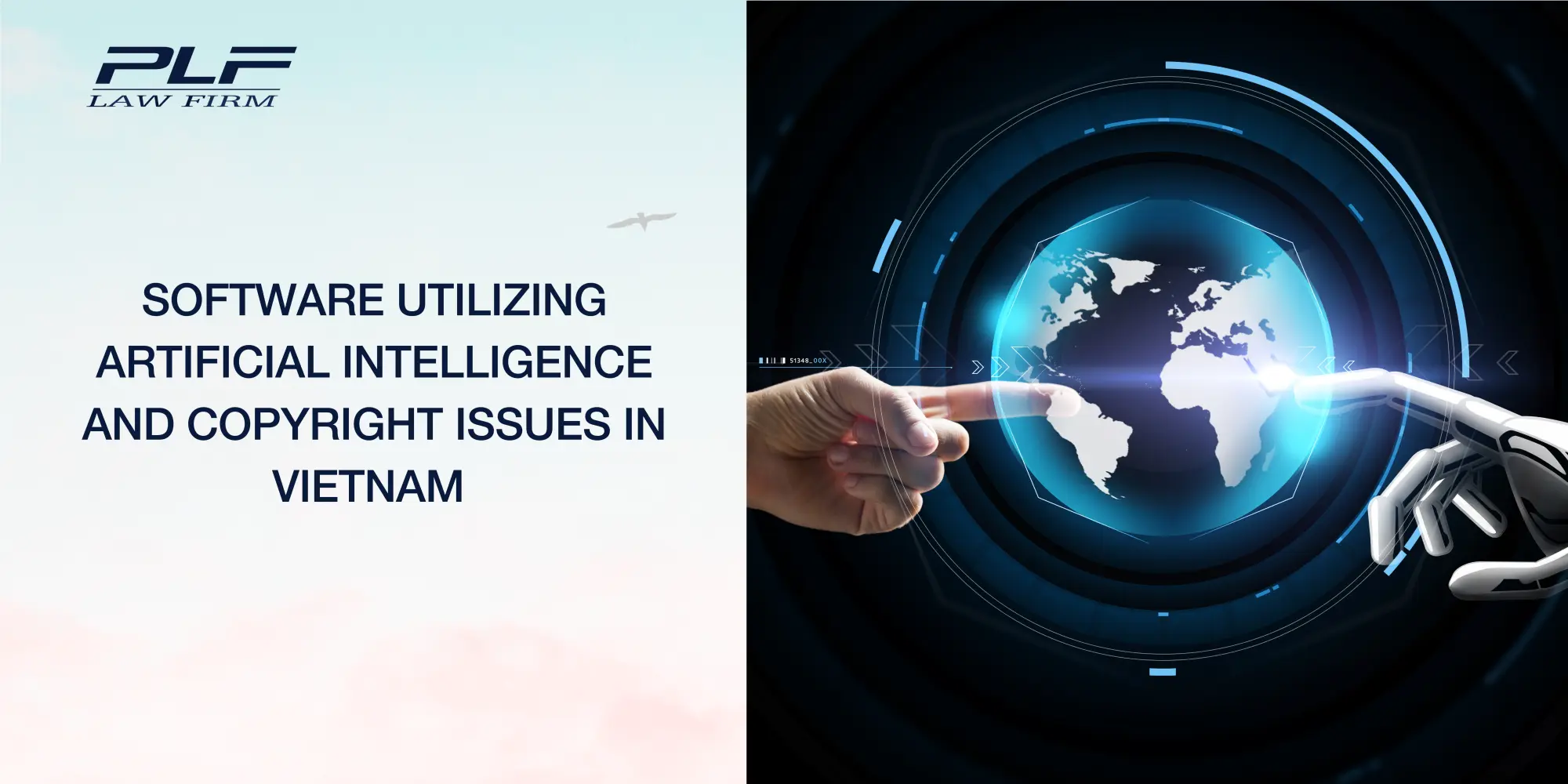
The development of software utilizing artificial intelligence (“AI”) based on copyrighted content generally raises legal questions regarding copyright and intellectual property rights in Vietnam. A typical example of this is the use of textbooks or workbooks published by publishers in Vietnam to create exercises and solutions for students and teachers. It is important to note that when AI software developers intend to use copyrighted materials as a basis for generating AI-driven learning content for teachers and students, they must clearly understand their responsibilities, obligations, and legal risks under Vietnamese law.
Related Articles:
AI and the legal profession in Vietnam
Specific incentives in the manufacturing of software products in Vietnam
Service: Copyrights
1. Overview of Copyright in Vietnam
Copyright in Vietnam is governed by the Intellectual Property Law of 2005, as amended and supplemented in 2009, 2019, and 2022 (“IP Law”), which grants rights to individuals and organizations over works they create or own. Copyright protects the legal interests of authors or copyright owners concerning creative works in literature, arts, and sciences, expressed in any medium or form, including textbooks, learning materials, and computer software.
Notably, the IP Law protects works under copyright without requiring authors or copyright owners to register with the Copyright Office of Vietnam. Accordingly, copyright in a work arises at the time the author creates it, regardless of whether it has been registered or not.
2. Use of copyrighted content for AI software development
Incorporating copyrighted works into AI systems for analysis and generating new content raises several copyright-related issues. Here are some essential considerations:
2.1. Data Analysis and Copyright
When AI processes content from copyrighted works to analyze, process, and generate new outputs (such as exercises, questions, or explanations), such actions are generally considered a form of work usage – rights that are exclusively held by the author or copyright owner under the law.
Additionally, copying content from a work for AI processing also falls within the scope of copyright protection. Unless such usage qualifies as an exception that does not require permission (such as personal research or non-commercial teaching), any action involving copying content from a copyrighted work requires authorization from the copyright owner.
2.2. Creation of Derivative Works
One of the key property rights of authors is the right to create derivative works. When AI utilizes content from an original work to generate new materials, whether in the form of exercises or automated questions, these outputs may be considered derivative works. Creating derivative works from copyrighted content without the consent of the author or copyright owner constitutes copyright infringement.
2.3. Purpose of use
The purpose of use is also a crucial factor in determining whether copyright infringement has occurred. Using copyrighted works for commercial purposes, such as integrating them into AI-powered educational software, requires the copyright owner’s consent and may entail royalty payments.
Thus, utilizing copyrighted content for analysis and generating new content through AI is clearly an exercise of copyright rights. Therefore, software developers must obtain necessary permissions and comply with copyright regulations to avoid legal risks.
3. Responsibilities When Using Copyrighted Content
Before using copyrighted content for AI software development, software developers must consider the following steps to ensure lawful usage and full compliance with intellectual property regulations:
3.1. Obtaining permission to use works
Textbooks and educational materials are protected as copyrighted works. Developers must obtain permission from authors or copyright owners before using these materials.
3.2. Entering into copyright licensing agreements
A contract should clearly define the scope of use, duration, and royalty fees. This helps protect the interests of both parties and prevents potential legal disputes.
3.3. Compliance with moral rights
The use of copyrighted works must not alter their content or meaning, and authorship must be properly attributed per legal requirements.
4. Legal consequences of non-compliance
Copyright infringement can lead to serious legal consequences, categorized into three main types:
4.1. Civil liability
- Cease and desist orders: The infringer may be required to immediately stop unauthorized use of the work.
- Royalty payments: The infringer must pay copyright royalties depending on the nature, duration, and benefits gained from the infringement.
- Compensation for damages: The infringer must compensate the copyright owner for any losses incurred due to the infringement.
- Public apology: In addition to compensation, the infringer may be required to issue a public apology and correct any misinformation.
4.2. Administrative penalties
- Unauthorized use, copying, or adaptation of copyrighted materials may result in fines of up to VND 250,000,000.
- Additionally, violating applications or products may be confiscated or removed from the market.
4.3. Criminal liability
- Serious copyright infringements may be subject to fines of up to VND 3,000,000,000 or imprisonment for up to three years.
- Individuals found guilty may also be prohibited from holding certain positions or engaging in certain professions for one to five years. Organizations may face operational suspension from six months to two years or be banned from conducting business in specific sectors for one to three years.
5. Key considerations
To mitigate legal risks when developing AI software, developers should consider the following actions:
- Contact copyright owners directly to ensure lawful use of content and negotiate appropriate licensing terms and fees.
- Register or notify relevant authorities: If the software has commercial applications, registration or notification with the Ministry of Industry and Trade may be necessary to comply with e-commerce regulations.
- Regularly consult with legal experts to stay updated and ensure compliance with intellectual property laws.
In conclusion, the use of copyrighted content to develop AI software in Vietnam requires strict compliance with copyright regulations. Any violations may result in civil, administrative, or criminal liability, impacting business operations and corporate reputation. Therefore, implementing proper legal measures and consulting experts is essential to ensure compliance and avoid unnecessary disputes.
At PLF Law Firm
We understand that the intersection of artificial intelligence and intellectual property rights is a complex and evolving area. As Vietnam continues to embrace digital transformation in education and technology, AI developers must pay close attention to legal frameworks—especially regarding the use of copyrighted content.
Our legal team offers strategic guidance to help clients navigate Vietnam’s IP landscape, ensuring compliance with copyright laws while supporting innovation. Whether you are building AI software, licensing educational content, or planning to expand your digital products, we are here to support you with tailored legal solutions.
If your business is integrating AI into educational technology or any content-based applications, our expertise in Intellectual Property, Licensing, and Technology Law can help you avoid legal pitfalls and unlock new opportunities.
📩 Contact PLF Law Firm today for expert legal advice on Intellectual Property and Technology Law in Vietnam via email at inquiry@plf.vn or call +84913 902 906.
Time of writing: 03 April 2025
PLF Law Firm