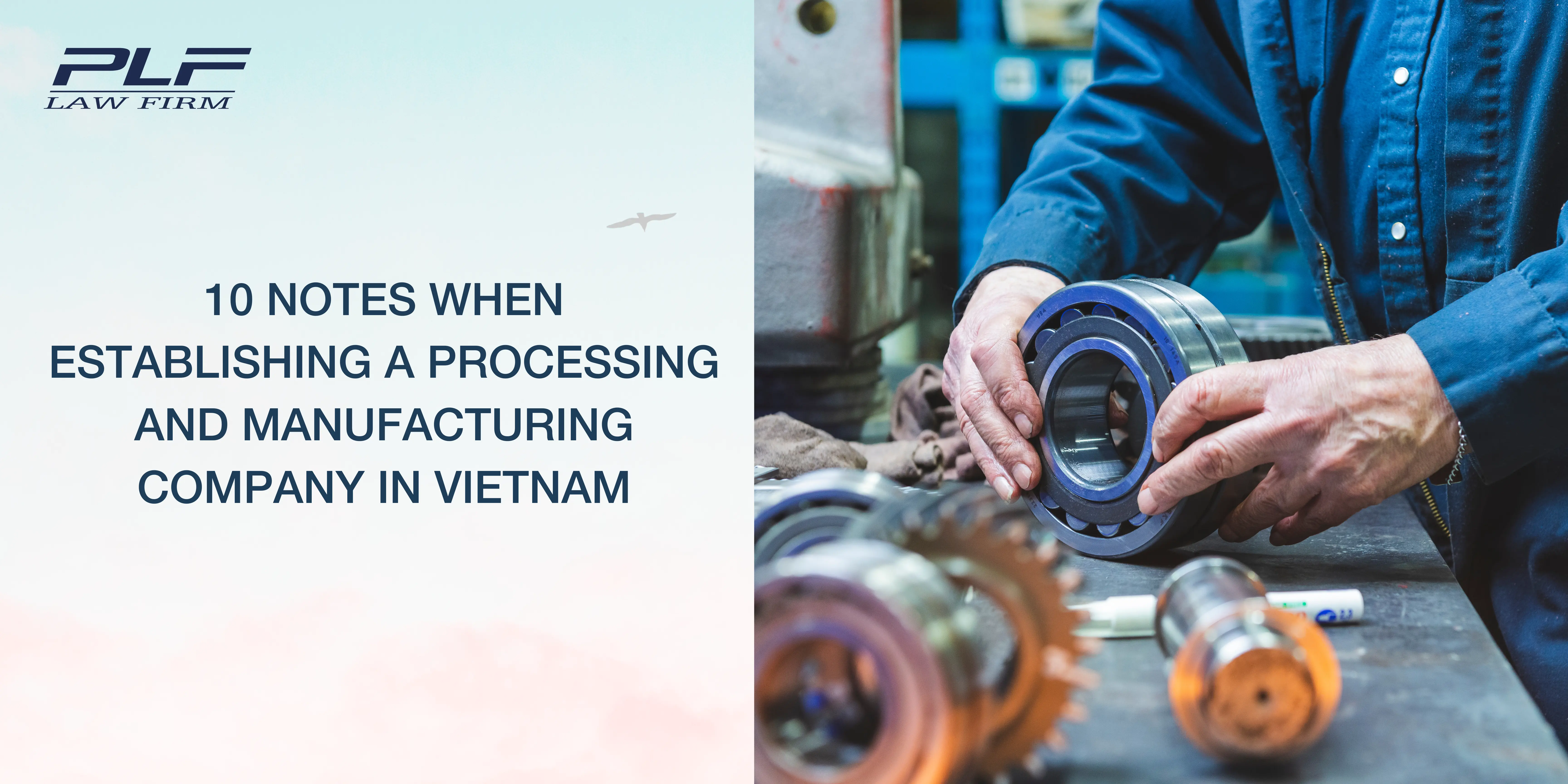
In recent years, the processing and manufacturing industry has been the main industry attracting FDI into the Vietnamese market. When carrying out investment activities in this field, foreign investors should pay attention to the following issues to limit risks in establishing projects and operating business activities.
The processing and manufacturing industry is a part of the industry-construction sector. This is one of the industries involved in the transformation of goods, raw materials or various materials into new products. In particular, processing is an activity related to the transformation of input materials into final products. Manufacturing will involve the process of manufacturing products from materials and components.
Sectors in the processing and manufacturing industry in Vietnam can be mentioned as food processing, machinery manufacturing, and electronics manufacturing. Automobiles and many other industries.
Find out other articles relating to Investment in Vietnam:
- Noteworthy aspects of commercial practices in international trade
- Vietnam’s Business Landscape: 4 popular business models that you should consider
- 8 advantages and disadvantages of partnership business form in Vietnam
1. Market Research
Not only the processing and manufacturing market but also the specific nature of business investment activities, any investor when conducting business needs to research about the market carefully and in detail before implementing. This research will help investors determine the needs of the market in the industry in which they plan to do business. Thereby, investors can outline effective business strategies in detail.
2. Market access conditions
Business activities for the processing and manufacturing industry in Vietnam have been listed in detail in Appendix I promulgated together with Decision No. 27/2018/QD-TTg dated 06 July 2018 of the Prime Minister promulgating the system of Vietnamese economic sectors. However, investors should also pay attention to cases of restricting market access or conditional market access industries and trades for foreign investors. Therefore, when investors plan to establish a company in this industry, it is necessary to carefully consider Vietnam’s market-opening commitments with other organizations and countries in the world.
3. Determination of capital and commitment to contribute capital
Investors cannot ignore capital and financial issues. Regarding investment capital and charter capital when establishing a company doing business in the processing and manufacturing industry, it is necessary to note the capital contribution schedule recorded in the investment registration certificate. For charter capital, investors also need to comply with the full capital contribution. This must be done within 90 days from the date the company is granted the enterprise registration certificate.
Normally, enterprises registering processing and manufacturing industries will need a relatively large amount of investment capital to operate production and business. Therefore, investors need to estimate the time for capital contribution, investment capital sources, and project implementation period. This helps to avoid fines from the competent state agencies for missed capital contribution deadlines.
Find out other articles relating to Investment Capital:
- Which assets are contributed as capital to an enterprise?
- Key steps for capital contribution via software in Vietnam
- 3 key points of foreign engagement through capital contribution and share purchase
4. Location
Currently, most regulated processing and manufacturing industries operate outside their registered headquarters. Therefore, Investors should carefully select a suitable location with adequate space and infrastructure. This location must comply with legal requirements for rental, design, and construction to support business operations.
5. Tax incentives
The Vietnamese state also promulgates tax incentives to orient the development of the processing and manufacturing industry. For example, import tax will be reduced for many imported goods and raw materials to serve manufacturing, machinery, and equipment in mechanical engineering, and high-tech industry. Therefore, it encourages foreign investment in domestic production.
Corporate income tax also has preferential policies for key industrial projects in each specific period. In addition, the mechanism related to value-added tax is also supported for some important products in the processing and manufacturing industry to stimulate the domestic market. The government will apply lower tax rates to these products than conventional products.
When establishing enterprises registered in processing and manufacturing industries, investors need to take advantage of the above preferential policies to minimize unnecessary costs and optimize profits for enterprises.
Find out other articles relating to Tax Incentives:
- Exploring legal requirements and tax incentives for business headquarters in Vietnam
- Specific investment incentives in agriculture and rural areas in Vietnam
- 4 main sectors entitled to special investment incentives
6. Environment-related procedures
The processing and manufacturing industry is production-oriented. Environmental factors are significantly impacted by this characteristic. Accordingly, when implementing processing and manufacturing projects, enterprises also need to build infrastructure, facilities, and effective environmental treatment systems. If an environmental impact assessment is required, regulations should be strictly and fully complied with when conducting an environmental impact assessment. Thereby supporting the locality to improve the environment, limiting pollution to the surrounding environment.
Find out other articles relating to Regulations on specific industries in Vietnam:
- Investment opportunities: Overseas education counseling services in Vietnam
- EPE establishment and notable issues
- Legal guide for foreign investors to access the Vietnamese pharmaceutical market
- Investing in cyber information security in Vietnam: What investors should know
- Foreign investors establishing tourism companies in Vietnam (Travel Agents)
- General guide for 8 types of logistics services in Vietnam
- 7 notable points in restaurant business for foreign investors in Vietnam
7. Labor-related issues
In general, the processing and manufacturing industry is an industry that needs to use large and many systems of machinery, equipment, and production lines. Hence, when doing business in this industry, enterprises need to plan occupational safety and health risk assessments to limit the risks and harmful factors that staff and employees may encounter when working.
Find out other articles relating to Labor matters:
- Vietnam Work Permit – Validity, extension, and exemption
- Insights about social insurance for foreign employees in Vietnam
- Unilateral termination of labor contracts under the Labor Code 2019
8. Plan the use of human resources
Human resources are one of the factors that businesses also need to pay attention to. However, for the processing and manufacturing industry, the requirements for experience and expertise in human resources are quite high. On the other hand, the Vietnamese government also encourages enterprises to recruit, train, and develop domestic resources to solve the employment problem for employees. Therefore, investors need to plan to recruit personnel before establishing the business. This guarantees sufficient qualified employees to achieve business goals.
9. Required licenses when operating
When doing business in the processing and manufacturing industry, there will be some specific industries that need to apply for a qualified license by a competent authority (in other words, the sublicense). For example, when an enterprise registers a food production and processing industry, it is necessary to apply for a Certificate of satisfaction of food safety and hygiene conditions. Or another example, when an enterprise does business in the field of chemicals, it is necessary to apply for a chemical trading license or a license to be eligible for chemical production and trading.
Find out other articles relating to required Certificates and Licenses when doing business in Vietnam:
- Investing in Vietnam: 5 key factors for obtaining an Investment Registration Certificate
- 4 key aspects of sub-licensing for conditional businesses in Vietnam
10. Compliance with the reporting regime
Investors also keep in mind obligations arising cyclically (monthly, quarterly, yearly) such as the reporting regime on investment activities, production, and business of enterprises. The content of the report will focus on the use of investment capital, results of production and business activities, information about employees, obligations of enterprises to the state budget, environmental protection treatment, and indicators for each field of operation.
11. Conclusion
Generally, the processing and manufacturing industry market is growing strongly and excitingly in Vietnam. These economic activities boast large production scales. They also benefit from technological advancements to enhance product quality and meet development demands.
The careful preparation of a clear roadmap based on the above notes will help investors avoid unnecessary risks. As well as, it will easily receive approval and licensing from competent state agencies when carrying out investment activities, and doing business in Vietnam.
At PLF Law Firm
At PLF Law Firm, we stand out for providing tailored solutions on Doing business in Vietnam, Mergers & Acquisitions and Tax & Accounting fields for foreign investors and business owners, helping them build a solid business foundation and minimize legal risks.
Contact us today to receive a free 30-minute consultation.